FreeWebCheck
SEO for Beginners: What Actually Moves the Needle
When I launched my first site, I spent weeks optimizing meta keywords, obsessing over keyword density (is 2% the magic number?), and reading forum posts about exact-match domains. None of it helped. The site never ranked for anything meaningful. I had spent more time on SEO theory than on writing actual content.
After building a few more sites and running an SEO analyzer tool professionally, I have a much clearer picture of what actually works for a new site. Spoiler: most of the standard beginner advice is either outdated or irrelevant.
The Things That Made a Real Difference
Write for a person, then optimize for Google. This sounds obvious, but watch what most beginners actually do: they start with a keyword, write a page around it, and the result reads like a robot assembled it from search results. The better approach is to write the most useful answer you can to a specific question someone is asking. Then go back and work the keyword into the title, the H1, and naturally into the first paragraph. Google is surprisingly good at understanding well-written content these days.
I did this with one of my own pages: stopped trying to rank for “best VPN” and instead wrote “what I learned from testing 12 VPNs.” The page gets steady traffic because people searching that phrase find exactly what they asked for. The keyword-driven page I replaced had better keyword density and worse performance.
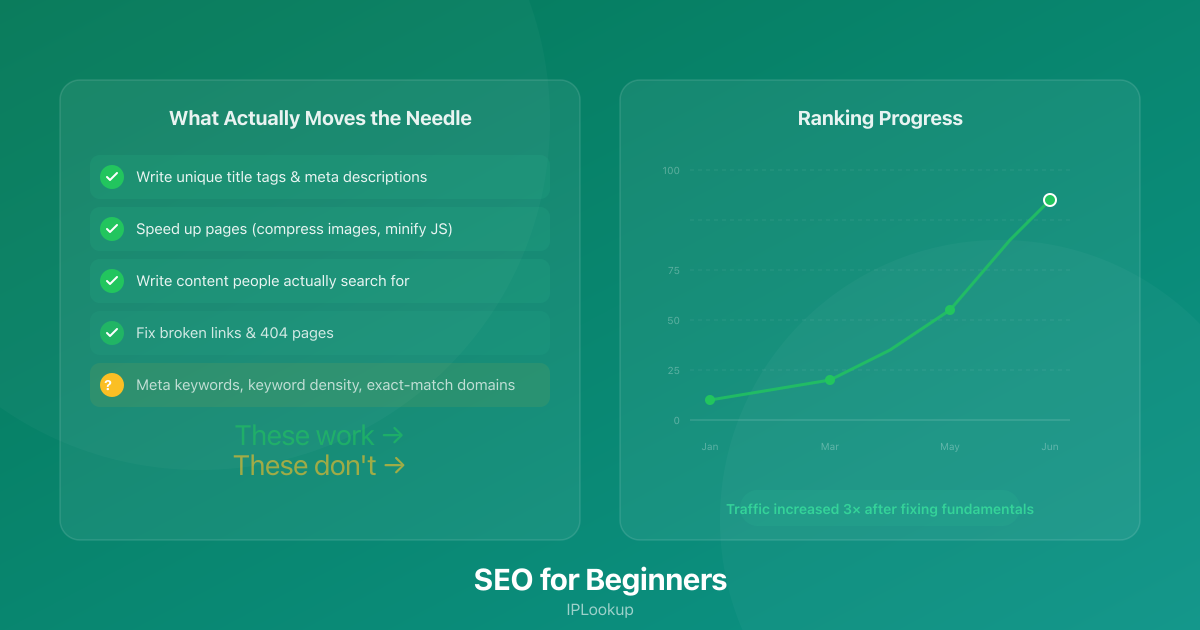
Every page needs a unique title tag and meta description. This is not optional, yet I audit sites regularly where half the pages are missing one or both. The title tag (30-60 characters) is what appears in search results as the clickable headline. The meta description (120-160 characters) is the snippet below it. Google Search Central states that well-crafted title links improve click-through rates and help Google understand a page’s relevance to a query (source). I’ve seen pages gain several ranking positions just from a rewritten title that better matched what people actually search for. Our SEO Analyzer checks both and flags any issues.
Page speed compounds over time. A fast-loading page isn’t just a ranking factor — it also lowers bounce rate, which feeds back into rankings indirectly. Google Search Central confirms that page speed is a ranking factor and that Core Web Vitals (LCP, FID, CLS) are part of the page experience signals used in search ranking (source). Most of the gains come from obvious fixes: compress and convert images to WebP (our Image Toolkit does this), remove JavaScript you’re not using, and enable browser caching. I had a page that loaded in 4.2 seconds. I compressed one hero image — one image — and it dropped to 1.8 seconds. That single change probably did more for its rankings than anything else I tried that month.
Internal links distribute your site’s authority. If you have one page that gets traffic or backlinks, link from that page to your other relevant pages. This passes some of that ranking power to pages that need it. Most beginners publish pages in isolation and never connect them. Your blog should reference your tools, your tools should reference your blog, and related pages should point to each other.
The Stuff Beginners Obsess Over That Doesn’t Matter
Keyword density is a myth. There is no ideal percentage of keyword usage. Write naturally. If your content reads like it was written for a search engine, you’ve gone too far. I have pages ranking in the top 3 that use their target keyword exactly once in the entire article.
Domain Authority and Domain Rating are useful for competitive analysis, not as goals. They correlate with rankings but aren’t ranking factors themselves. I’ve seen a site with DR 12 outrank a site with DR 68 for a specific query because the smaller site had a better, more directly relevant page. Chase relevance, not arbitrary scores.
Exact-match domains were devalued years ago. A keyword-stuffed domain name like best-cheap-widgets-2024.com is more likely to look spammy than helpful. Pick something clean and brandable.
Blog comment backlinks are a waste of time. They’re almost always nofollow, provide negligible value, and the effort spent on fifty comments would be better invested in one decent guest post or an improved page on your own site.
How to Start Without Overcomplicating It
Pick three search terms where you could realistically write the best answer. Not the most competitive terms — just ones your audience types into Google. Write a solid page for each. Make sure every page has a unique title tag and meta description. Link between them. Then run your site through our Website Audit to catch the obvious issues you missed.
That approach won’t go viral. But it will get you indexed, ranked, and slowly growing — which is more than most new sites can say.